Quick Summary
- Your credit score is your “financial passport” in Canada. Without it, you cannot rent a good apartment, finance a car, or get a premium phone plan.
- Apply for a Student or Newcomer Credit Card immediately upon arrival (no previous credit history required).
- Never spend more than 30% of your credit limit (The Golden Rule of Credit Utilization).
- Always pay your balance in full and on time. Never pay just the “minimum due”.
Table of Contents
If you have just landed in Canada as an international student or a permanent resident, you are starting with a “blank slate.” In your home country, cash might be king, but in Canada, your Credit Score dictates your financial freedom.
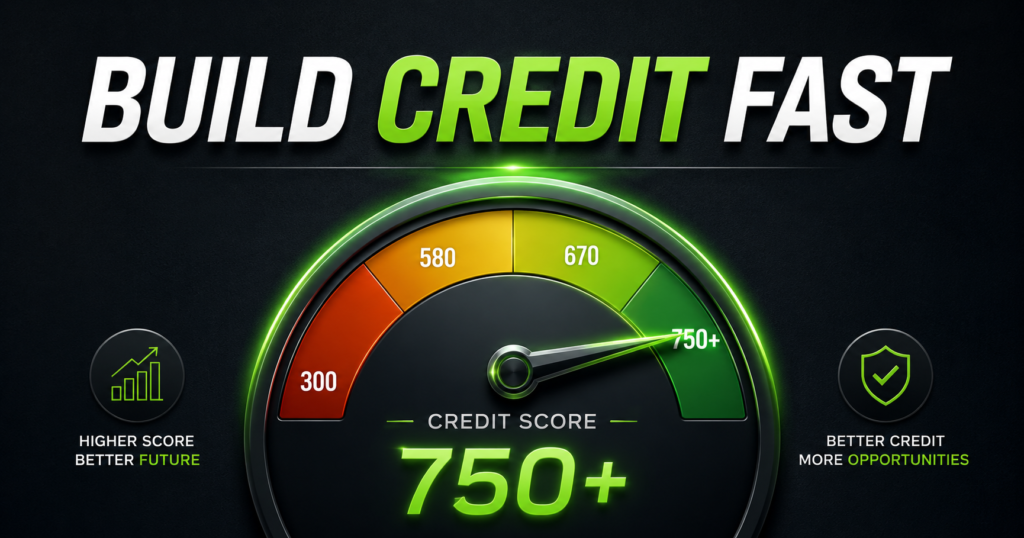
A credit score is a three-digit number ranging from 300 to 900 that tells banks, landlords, and telecom companies how trustworthy you are with money. A score of 750 or higher is considered “Excellent” and unlocks the best interest rates, easiest apartment approvals, and premium rewards cards.
Building this score is not hard, but it requires discipline. Here is the step-by-step mathematical formula to build a 750+ credit score in Canada within your first 12 to 18 months.
Step 1: Get Your First Canadian Credit Card
You cannot build credit using a debit card or by paying for your groceries with your GIC funds. You must borrow money and pay it back to prove your reliability to Canada’s two main credit bureaus: Equifax and TransUnion.
Since you have no history, standard credit cards will reject you. Instead, you need to apply for specialized programs:
- Student Credit Cards: Banks like Scotiabank, CIBC, and BMO offer cards specifically for international students. They usually approve you for a $500 to $1,000 limit simply by showing your Study Permit and College Enrollment letter.
- Newcomer Programs: If you are a worker or permanent resident, banks have “New to Canada” programs that offer unsecured credit cards without requiring a credit check.
- Secured Credit Cards: If you are rejected for the above, you can get a secured card (like from Neo Financial or Capital One). You give the bank a $500 security deposit, and they give you a card with a $500 limit. After a year of good behavior, you get your deposit back.
Step 2: Master the 30% Utilization Rule (Crucial)
This is the number one secret that separates people with a 600 score from people with a 750+ score. It is called your Credit Utilization Ratio.
Credit bureaus look at how much of your available credit you are using. The golden rule is: Never use more than 30% of your total limit at any given time.
| Your Credit Limit | Maximum You Should Spend (30%) | Impact on Score |
|---|---|---|
| $500 | $150 | Highly Positive 📈 |
| $1,000 | $300 | Highly Positive 📈 |
| $2,000 | $600 | Highly Positive 📈 |
If you have a $1,000 limit and you spend $900, the credit bureaus think you are desperate for cash and your score will drop rapidly—even if you pay it back on time.
If your limit is only $500, spending 30% means you can only spend $150. If you need to buy a $400 laptop, pay $300 out of your checking account straight onto your credit card BEFORE the statement prints. This tricks the system into seeing a low balance.
Step 3: The 100% Payment Rule
Every month, your bank will send you a statement with two numbers: the Statement Balance (what you spent) and the Minimum Payment (usually $10 or 3% of your balance).
Never, ever pay just the minimum. If you only pay the minimum, you will be charged a massive 20.99% interest rate on the remaining balance, and your credit score will stagnate.
To hit a 750+ score fast, set up Auto-Pay for the Full Statement Balance from your chequing account. This ensures you never miss a payment (Payment History makes up 35% of your total credit score calculation).
Step 4: Avoid These Credit Score Killers
Building credit is like building a tower—it takes months to build, but one mistake can knock it down.
- Applying for Too Many Cards: Every time you apply for a credit card, the bank does a “Hard Inquiry” on your file. This drops your score by 5 to 10 points. Do not apply for store cards (like Canadian Tire or Walmart cards) just to get a 10% discount at the cash register.
- Closing Your Oldest Card: The length of your credit history matters. Your very first student card is your most valuable asset. Even if you get a premium travel card later, keep your first, no-fee student card open forever to show a long history.
- Ignoring Phone Bills: In Canada, telecom providers (Rogers, Bell, Fido) report to credit bureaus. If you miss a $45 phone bill payment, it will go to collections and destroy your credit score for up to 7 years.